Choosing between disposable and reusable vapes involves more than price or appearance. It also involves battery design, maintenance, waste, ingredients, and user control. The key question is: what is the difference between disposable and reusable vapes? This guide examines ten practical differences through a health-conscious and evidence-based lens.
Disposable devices arrive prefilled and usually stop working when their liquid or battery runs out. Reusable devices contain rechargeable batteries and typically use replaceable pods, tanks, or e-liquid. That distinction affects daily handling. A disposable may feel simple, but its entire body becomes waste after use. A reusable device requires charging, cleaning, and careful storage. Small habits matter. The CDC’s 2024 National Youth Tobacco Survey reported that 55.6% of current student e-cigarette users used disposable devices. However, that figure describes device preference, not safety or product quality.
Environmental evidence adds another important dimension. Material Focus reported that approximately five million disposable vapes were discarded weekly in the United Kingdom during 2023. Many contained lithium batteries and recoverable materials. Incorrect disposal can create fire and pollution risks. Reusable products may reduce the number of discarded devices, but they still require responsible battery recycling. The waste does not disappear.
This article compares upfront cost, long-term expenses, portability, vapor consistency, maintenance, battery life, flavor flexibility, waste, safety considerations, and regulation. It avoids claiming that either format is harmless. Evidence remains incomplete, especially for newer products. Readers should also question marketing language, because “reusable” does not automatically mean safer, cleaner, or more sustainable.
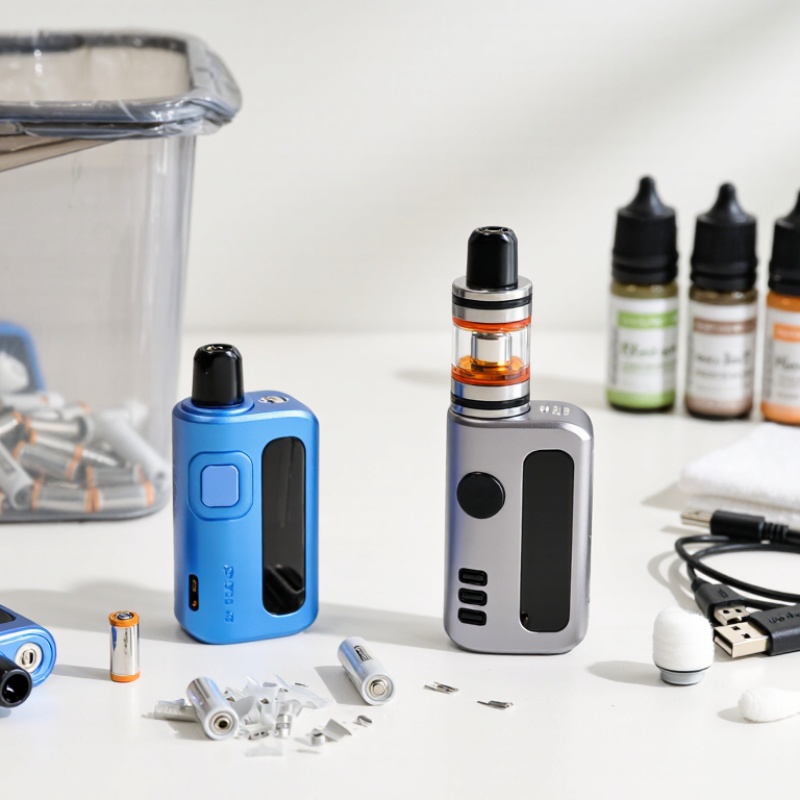
Disposable and reusable vapes differ most clearly in their definitions and basic construction. A disposable vape usually arrives prefilled and ready to use. Its battery, liquid chamber, coil, and airflow path form one compact unit. When the liquid or battery ends, the whole device is normally discarded. It often has a sealed body, a small indicator light, and little user adjustment.
A reusable vape separates the power section from the liquid system. It usually includes a rechargeable battery, a pod or tank, a heating coil, and a charging port. Some models accept refillable pods, while others use replaceable prefilled pods. Users can often control airflow or power, although adjustment levels vary widely. This modular design may reduce repeated device purchases, but it requires cleaning, charging, and careful part replacement.
The boundary is not always clean. Some “disposable” devices can be recharged, yet their liquid chamber remains sealed. That feature does not make them fully reusable. A common mistake is judging the device by its charging port alone. From a practical inspection, the refill system matters more. Check whether the pod opens safely, whether the coil is replaceable, and whether instructions explain charging clearly. Reusing damaged parts is risky. I once viewed compact design as automatically simpler; it is not. Small bodies can hide complex electrical and liquid-flow limits. Handle every device according to its instructions, and follow local rules for battery and electronic waste disposal.
A disposable vape usually arrives filled and ready to use. Its battery, liquid chamber, and coil form one sealed unit. When the liquid or battery ends, the device is normally discarded. A reusable vape has separate, replaceable parts.
Not necessarily. Some disposable devices can recharge but still have sealed liquid chambers. A refill system matters more than the charging port. Check whether the pod opens safely and whether the coil can be replaced.
Disposables contain a fixed amount of liquid and limited battery power. Reusable devices usually accept refills and rechargeable batteries. That can support longer use. Charging still requires planning.
Reusable devices may allow airflow, power, and liquid adjustments. These settings can change warmth, flavor, and vapor output. More control is not always easier. A worn coil may create a harsh, dry taste.
Disposables are usually compact and ready without a charger or liquid bottle. They fit easily into a small pocket. Reusable devices need extra equipment. A charger and refill container can clutter a crowded commute.
It may need charging, cleaning, refilling, and coil replacement. Follow the instructions carefully. Leaks can happen. Overfilling or using unsuitable liquid may damage the coil.
Neither format is risk-free. Nicotine can cause dependence, and only legally permitted adults should consider nicotine products. Keep devices away from children, pets, heat, and sunlight. Stop using any device that becomes hot, swollen, cracked, or wet.
Reusable devices may reduce repeated packaging and device purchases. However, they still require replacement coils, pods, batteries, or liquid. Disposables create more discarded units. Long-term savings depend on maintenance and available replacement parts. My judgment is not absolute.
Disposable and reusable vapes differ mainly in design, capacity, performance, and ownership. Disposable vapes are prefilled, compact devices intended for limited use before disposal, while reusable vapes typically include a rechargeable battery and a refillable or replaceable liquid container. When considering what is the difference between disposable and reusable vapes, users should compare e-liquid capacity, battery life, vapor consistency, and available settings. Reusable devices may offer longer sessions and more control, whereas disposables are generally simpler and require less setup.
Cost and convenience also vary over time. Disposables can be affordable initially but may create higher ongoing expenses with frequent replacement. Reusable models require charging, cleaning, and occasional part replacement, yet they may provide better long-term value. Environmental impact is another important factor, since discarded batteries, plastics, and electronic components increase waste. Portability, ease of use, leak prevention, responsible storage, and battery safety should also be considered. Users should follow local regulations and dispose of electronic devices through appropriate recycling programs.

 Flow Vape