How to Fix a Disposable Vape Producing Less Vapor?

Time:2026-10-15 Author:Sienna
0%

A disposable vape can produce noticeably less vapor for several ordinary reasons. The battery may be nearly depleted, the e-liquid may be running low, or the airflow path may be partly blocked. Cold temperatures can also thicken the liquid and reduce vapor output. If you are asking, “why is my disposable vape producing less vapor,” start with simple observations rather than forcing the device.

Check whether the draw feels restricted. Look for lint around the mouthpiece and airflow openings. Keep the device upright and at room temperature for several minutes. Do not open it, refill it, puncture it, or connect it to an unapproved charger. Disposable designs are not intended for internal repair. That matters.

A weak, burnt, or unusually hot draw may indicate that the coil is dry or damaged. Stop using it if the device leaks, swells, cracks, overheats, or makes unusual sounds. These signs deserve caution, not experimentation. In my experience, users often keep inhaling harder, hoping to restore the vapor. That can worsen the problem and irritate the throat. It is easy to overlook.

This guide explains practical checks, likely causes, and safe replacement decisions. It also distinguishes normal performance changes from possible defects. Product instructions and manufacturer guidance should take priority, because designs differ between brands. Vapor volume is not a reliable measure of nicotine delivery or product quality. If symptoms such as dizziness, nausea, chest discomfort, or breathing difficulty occur, stop using the product and seek appropriate medical advice. Handle empty devices according to local battery and electronic-waste guidance.
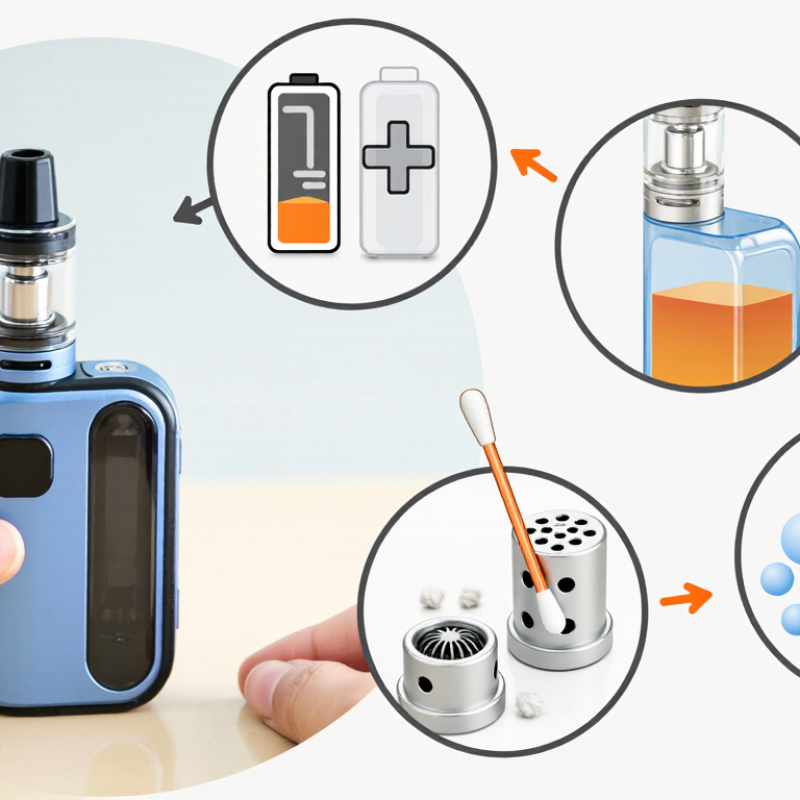
How to Fix a Disposable Vape Producing Less Vapor?

Diagnose Low Vapor: Check Airflow, E-Liquid, Coil, and Battery Causes

When a disposable vape produces less vapor, inspect airflow before assuming the coil has failed. Lint or condensation can partly block the tiny intake holes. Wipe the mouthpiece with a dry tissue, then take a gentle, steady puff. Avoid covering the intake area with your fingers. A tight draw often indicates restricted airflow, not weak liquid. Public Health England’s 2018 evidence review noted that aerosol output changes with puff duration, power, and liquid composition. Your technique matters.

Check the e-liquid window, if available. A nearly empty device cannot saturate its heating material consistently. A burnt taste suggests the coil is overheated or already damaged. Do not add liquid or open a sealed disposable unit. That can cause leakage and battery damage. The CORESTA Recommended Method 81 highlights how testing conditions affect aerosol measurements, so “less vapor” is not always a hardware fault. Room temperature matters too; cold liquid moves more slowly.

Battery performance may also decline after repeated use, long storage, or exposure to heat. If the device becomes unusually hot, leaks, smells burnt, or shows physical damage, stop using it and follow local disposal guidance. The U.S. Fire Administration has documented fire risks linked to damaged lithium-ion vape batteries. This point is easy to overlook. A device may still activate while its battery cannot deliver stable power. Do not charge a disposable unless the manufacturer specifically designed it for charging. Some diagnoses remain uncertain without controlled testing.

Clear Condensation and Blocked Air Inlets Without Damaging the Device

How to Fix a Disposable Vape Producing Less Vapor?

Reduced vapor often comes from condensation or restricted airflow. Check the mouthpiece under bright light. A small wet film can narrow the passage. Hold the device upright and wipe the opening with clean, dry tissue. Avoid inserting pins, needles, or cotton swabs deeply. They can damage the internal airway or push residue farther inside. Let the device rest for several minutes.

Air inlets are usually tiny holes near the base or sides. Inspect them for lint, dust, or sticky residue. Wipe the exterior gently with a dry cloth. Do not rinse the device or blow moisture into the holes. A gentle tap with the mouthpiece facing downward may release excess condensation. Do not shake it hard. I once assumed stronger inhaling would help, but that only pulled more liquid into the airway.

Take slow, natural puffs after cleaning. Very forceful draws can worsen flooding and cause liquid to reach your mouth. If airflow remains weak, the coil may be saturated, depleted, or defective. Do not open the casing or apply heat. Stop using the device if it becomes unusually hot, leaks, cracks, smells burnt, or behaves unpredictably. Follow the manufacturer’s safety instructions, especially for disposal. Sometimes, replacement is safer than a risky repair.

How to Fix a Disposable Vape Producing Less Vapor? - Clear Condensation and Blocked Air Inlets Without Damaging the Device
Step Observed Condition Safe Action Suggested Duration Expected Result Safety Level
1 Airflow feels tight or restricted Inspect the mouthpiece and visible air inlets for lint, dust, or pocket debris. Wipe the exterior with a clean, dry, lint-free cloth. 1–2 minutes The draw should feel less restricted without requiring a harder pull. Low risk
2 Moisture or condensation is visible near the mouthpiece Remove the mouthpiece from your lips and gently tap the device mouthpiece-side down over a tissue. Wipe away surface moisture. 30–60 seconds Small droplets may clear and airflow may become more consistent. Low risk
3 Gurgling or spitting occurs during a draw Stop taking repeated strong puffs. Allow the device to rest upright on a dry, stable surface so excess condensation can settle. 5–10 minutes Gurgling may reduce as pooled condensation moves away from the mouthpiece. Low risk
4 Air inlet openings appear partially blocked Brush around the outside of the openings with a soft, dry brush. Do not insert pins, needles, paper clips, or other objects into the holes. 1–2 minutes Visible debris may be removed without affecting the internal airflow sensor or battery. Use care
5 Vapor remains weak after external cleaning Keep the device upright at room temperature and avoid rapid repeated draws. Check whether the device is near the end of its expected service life. 10–15 minutes A short rest can help distinguish condensation from an exhausted e-liquid supply or battery. Low risk
6 The device activates inconsistently Take a gentle, steady draw rather than a forceful one, and keep the airflow openings uncovered while using it. One draw at a time A consistent draw can help the automatic airflow sensor operate normally. Use care
7 Liquid leakage, unusual heat, or a damaged casing is present Stop using the device immediately. Place it on a non-flammable surface away from heat and dispose of it according to local battery and electronic-waste rules. Immediately Further use is avoided when the device may have a battery, seal, or internal component fault. Stop use
8 The device is empty or produces no vapor after all checks Do not refill, recharge, open, puncture, or modify a disposable device unless it was specifically designed for that function. Replace and recycle it through an appropriate collection point. Final check This prevents damage caused by unauthorized disassembly or use beyond the device’s intended design. Stop use
Important: Never use water, compressed air, sharp tools, open flames, or external heat to clear a disposable vape. If the device becomes unusually hot, leaks, smells burnt, or shows physical damage, stop using it immediately.

Use 2–4-Second Draws and Allow 20–30 Seconds Between Puffs

How to Fix a Disposable Vape Producing Less Vapor?

A weak cloud often comes from rushed or repeated draws. Use a gentle 2–4-second draw instead of a sharp pull. Keep the device upright, and avoid covering its airflow holes with your fingers. Small changes matter. A tight draw can restrict airflow and make the vapor feel thin, even when the battery still works.

Allow 20–30 seconds between puffs. This pause gives the heating element time to cool and allows the liquid near the wick to replenish. CORESTA Recommended Method No. 81 and ISO 20768 commonly use a three-second puff, 55-milliliter volume, and 30-second interval for aerosol testing. These are laboratory conditions, not personal-use guarantees. However, they provide a useful reference for steadier operation. Do not chain-puff.

In practical troubleshooting, take a slow draw, release it, and watch for unusual heat, leaking, or a burnt taste. A warm mouthpiece can signal excessive use or poor airflow. Stop using the device if it becomes unusually hot, damaged, or smells burnt. Some devices naturally produce less vapor near the end of their service life. That detail is easy to miss. I would not assume every low-output problem can be fixed by drawing harder; stronger pulls may worsen dry heating and shorten device performance.

How to Fix a Disposable Vape Producing Less Vapor?

Use gentle 2–4-second draws and allow 20–30 seconds between puffs. This timing can help the device’s heating element and liquid supply recover. If vapor remains weak, the disposable vape may be depleted or malfunctioning.

Assess 50/50 PG/VG Liquid Flow and Watch for Dry-Wick Symptoms

A disposable vape producing less vapor often has a liquid-flow problem, not an immediate coil failure. A 50/50 PG/VG blend normally balances throat sensation and wicking speed. However, cold storage makes the liquid move more slowly. A blocked air inlet can create the same weak draw. Check the mouthpiece and airflow openings for lint, condensation, or pocket debris. Do not puncture, refill, or dismantle the device.

Dry-wick symptoms are usually easy to notice. The vapor feels unusually hot, the taste becomes sharp or burnt, and the output drops after several quick puffs. A faint crackling sound may appear. Pause briefly and keep the device upright; this can help liquid reach the wick. It is not a guaranteed fix. If the burnt taste remains, replacement is safer than repeated use.

CORESTA Recommended Method 81 commonly uses a 55 mL puff, lasting three seconds, with 30-second intervals. This matters because rapid, repeated puffs can outpace liquid delivery. The National Academies’ 2018 review also reported that aerosol output changes with power, puff duration, and liquid formulation. Those findings support a practical point: vapor volume is not a reliable quality test alone. My own troubleshooting mistake was blaming the battery first. A restricted flow path caused the weaker output. If the device becomes abnormally hot, leaks, or tastes burnt continuously, stop using it and dispose of it through appropriate local battery-waste channels.

Stop Using Leaking, Burnt, Overheated, or Non-Rechargeable Disposables

When a disposable vape produces less vapor, do not treat it as a problem to solve at any cost. Weak output can signal an empty liquid reservoir, blocked airflow, or a failing battery. However, leaking liquid, a burnt taste, unusual heat, or visible damage changes the situation. Stop using it immediately. Place it on a nonflammable surface, away from children and pets. Do not squeeze, puncture, open, or refill the device. Some users inhale harder, hoping to clear a blockage. That can worsen overheating and throat irritation.

A burnt flavor often means the heating material is dry or damaged. Waiting rarely restores it. If the device feels hot, let it cool naturally. Do not use water or a refrigerator. A swollen, cracked, or hissing device needs careful isolation and local hazardous-waste guidance. Never connect a non-rechargeable disposable to a charger. Its internal battery was not designed for charging. Even if the light responds, that does not prove it is safe. I once assumed a cool exterior meant a healthy device. Internal damage is not always visible.

Tips: Check the mouthpiece for lint without inserting tools. Keep the device upright and dry. Use gentle puffs, not repeated hard pulls. If airflow stays weak, stop using the disposable and follow local battery or e-waste disposal rules. Do not place it in ordinary household trash. Seek medical advice if leaked liquid contacts your eyes or skin, or causes symptoms.

FAQS

Why might a disposable vape produce less vapor?

Rushed draws, blocked airflow, cold liquid, or a nearly depleted device can reduce vapor. Drawing harder may worsen the problem.

How long should each draw last?

Use a gentle two-to-four-second draw. Avoid sharp, forceful pulls. Keep the device upright during use.

How much time should pass between puffs?

Wait about 20–30 seconds between puffs. This allows the heating element to cool and liquid to reach the wick.

What should I check if airflow feels restricted?

Inspect the mouthpiece and airflow openings. Remove visible lint, condensation, or pocket debris without inserting sharp objects.

What are common signs of a dry wick?

Watch for hot vapor, a sharp or burnt taste, lower output, or faint crackling. These signs may appear after several quick puffs.

Can cold storage affect vapor production?

Yes. Cold liquid moves more slowly and may reach the wick less easily. Let the device return naturally to room temperature.

Does a 50/50 liquid blend guarantee steady vapor?

No. A 50/50 blend often supports balanced flow, but temperature, airflow, power, and puff timing still matter.

When should I stop using the device?

Stop if it becomes unusually hot, leaks, stays burnt-tasting, or appears damaged. Replacement is safer than repeated troubleshooting.

Is vapor volume a reliable quality test?

Not by itself. Output changes with power, puff duration, airflow, and liquid formulation. A large cloud does not prove better performance.

What mistake can happen during troubleshooting?

I might blame the battery too quickly. A restricted airflow path may be the real cause. Stronger pulls are not always the answer.

Conclusion

If you are wondering, “why is my disposable vape producing less vapor,” begin by checking the simplest possible causes: restricted airflow, blocked air inlets, low e-liquid, a worn coil, or a weak battery. Gently clear any condensation or debris around the mouthpiece and air openings without inserting sharp objects or opening the device. If the device leaks, tastes burnt, becomes unusually hot, or is designed to be non-rechargeable and appears depleted, stop using it rather than attempting repairs.

Vapor production can also improve when you take steady 2–4-second draws and wait 20–30 seconds between puffs, allowing the wick to resaturate and the device to cool. A balanced 50/50 PG/VG liquid generally supports consistent flow, while dry, harsh, or burnt-tasting vapor may indicate that the wick is not receiving enough liquid. If these checks do not resolve the issue, safely discontinue the disposable instead of forcing further use.

Sienna

Sienna

Sienna is a skilled marketing professional with a deep expertise in our company’s core products and services. With a passion for innovation and detail, she plays a pivotal role in crafting insightful blog posts that not only highlight the unique features of our offerings but also provide valuable......